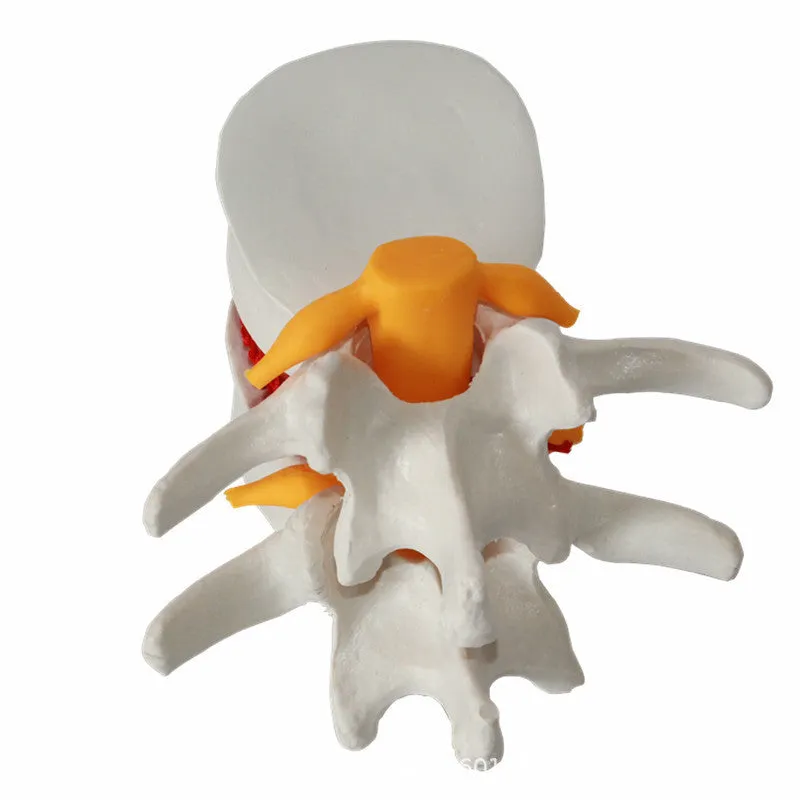
Demonstration model of a human lumbar intervertebral disc medical education anatomy teaching aid, showing intervertebral disc herniation condition, made from PVC plastic, measuring 11 cm by 10 cm by 7.6 cm in a white colour.


Demonstration model of a human lumbar intervertebral disc medical education anatomy teaching aid, showing intervertebral disc herniation condition, made from PVC plastic, measuring 11 cm by 10 cm by 7.6 cm in a white colour.
PVC Lumbar Intervertebral Disc Herniation Model for Medical Training and Patient Education

This specialised anatomical model provides a focused, three-dimensional representation of a herniated lumbar intervertebral disc. Designed for clarity in educational and clinical environments, it bridges the gap between textbook diagrams and real-life pathology. Educators in medical schools, nursing programmes, and allied health fields can use this tool to demonstrate the structural compromise of a disc, explaining how nucleus pulposus material protrudes through the annulus fibrosus. Its specific design aids in teaching the mechanics of back pain, sciatica, and the principles behind diagnostic imaging and surgical interventions like microdiscectomy. For healthcare professionals, it becomes a valuable visual aid during patient consultations, helping to demystify complex spinal conditions and treatment pathways.
Features and Construction
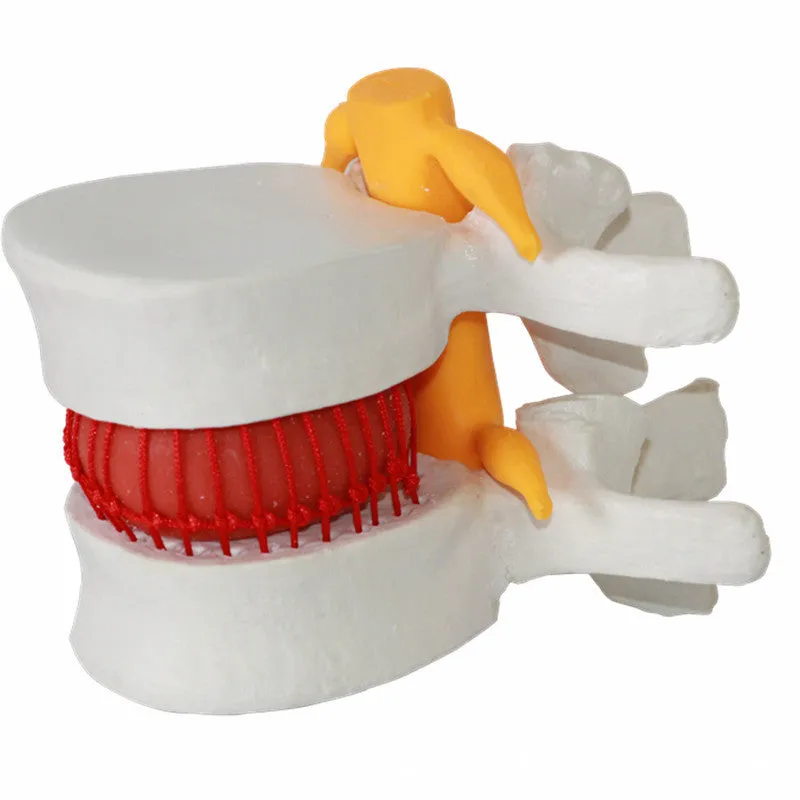
This model is engineered for accuracy and practicality in a teaching setting. Its construction prioritises a clear demonstration of a specific pathological state over a fully articulated spine segment, making it a targeted educational resource.
Material and Build
The model is fabricated from PVC (Polyvinyl Chloride), a material chosen for its ability to capture fine anatomical detail through moulding processes. This results in a rigid, solid model that can withstand repeated handling by students and professionals without losing its shape or definition. The white colour of the PVC provides a neutral, high-contrast background that makes the features of the herniated disc—such as the bulge or prolapse—stand out clearly, facilitating immediate visual recognition of the pathology being demonstrated.
Size and Practical Fit
With dimensions of 11 cm tall, 10 cm wide, and 7.6 cm deep, the model is deliberately compact. This size makes it highly portable, easily carried in a briefcase or bag between lecture theatres, clinics, and consulting rooms. Its modest footprint allows it to be placed on a desk, seminar table, or small display stand without occupying excessive space. The total weight of 0.22 kg further enhances its portability, ensuring it is not cumbersome to use during demonstrations or one-on-one explanations.
Uses and Placement

The model's primary value lies in its application across various medical and educational contexts. It serves as a concrete reference point for abstract anatomical concepts.
Event or Professional Use
In formal educational settings, such as university medical departments, nursing colleges, and physiotherapy schools, this model is an effective prop for lecturers teaching spinal anatomy, common pathologies, and orthopaedic principles. It is equally useful in hospital settings for continuous professional development (CPD) sessions for junior doctors, surgical nurses, or physiotherapists. At medical conferences or health fairs, it can serve as an engaging display item to illustrate discussions on back pain management and minimally invasive spinal procedures.
Everyday Home Use
While primarily a professional tool, this model also has a role in the home offices of private practitioners, including osteopaths, chiropractors, and specialist physiotherapists. It provides a constant, reliable visual aid for daily patient consultations, helping to explain diagnoses, the rationale for specific exercises, or the expected outcomes of referred treatments. Its durability means it remains a long-term resource in a clinical environment.
Benefits and Buying Value

Choosing this model offers distinct practical advantages for educators and clinicians seeking reliable teaching tools.
Reuse and Low Maintenance
The PVC construction is inherently low-maintenance. It does not require specialised cleaning or preservation; a simple wipe with a dry cloth keeps it presentable. Its robust nature means it is not a consumable item but a durable asset that can be used for cohort after cohort of students or in countless patient consultations without significant wear, providing ongoing value from a single purchase.
Why Choose This Product
This model stands out for its singular focus on intervertebral disc herniation. Unlike generic spine models, it isolates and exaggerates this specific condition for maximum educational impact. The combination of precise scale, durable PVC material, and clear white finish creates a tool that is both informative and practical. Its compact size and light weight make it exceptionally versatile, suitable for dynamic teaching environments where portability and ease of use are important. It fills a specific niche for those who need to teach or explain this common spinal pathology with clarity and tangible evidence.